hello and welcome to our Network
segmentation course I'm professor wool
and today's lesson will be discussing
the challenges of east-west traffic
discovery for a network segmentation so
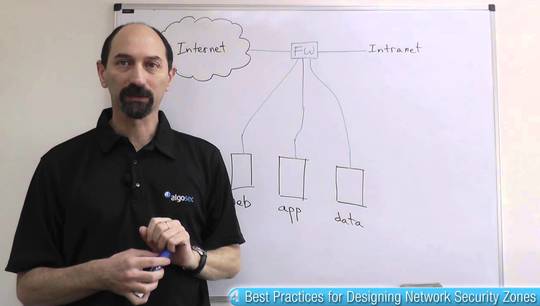
our starting point is you have a data
center this sketch is supposed to be the
data center you have all kinds of
servers in the data center and you have
some client networks outside the data
center connecting to these servers and
there is communication going on from the
clients to the servers and possibly
among the server's themselves some
servers have to communicate with other
servers and all of this is working just
fine and supporting your business and
now you have made the decision to
segment the data center because you're
concerned about insider attacks you want
to partition the internal data center
and control what what can be
communicated between various points
inside and outside of the data center so
you've made the decision to segment the
data center and now you need to
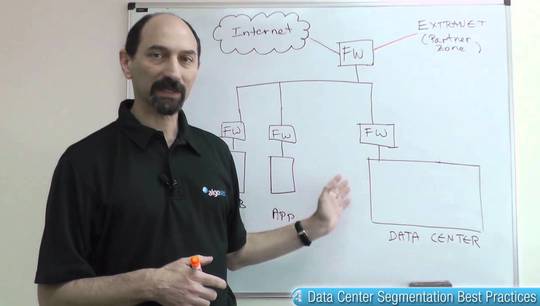
implement that decision well the the
first step to do is basically to place a
filtering device a firewall in a choke
point in the network so you identify
where you could place a firewall in the
center of the traffic in the data center
so that it can see all the traffic flows
that it needs to filter and you've made
the decision to place the firewall there
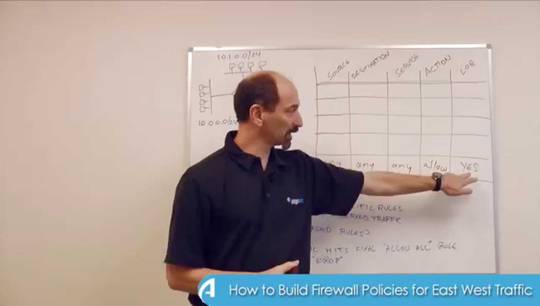
so far so good but you still have to
face a pretty significant challenge of
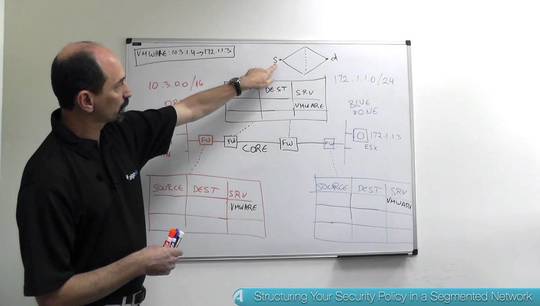
writing the filtering policy on that
firewall and writing the filtering
policy really needs to be a balancing
act that meets two goals first of all it
needs to allow all the business traffic
to go through because the last thing you
want is for that new firewall that
you're placing in the middle of your
data center to start blocking critical
traffic so it needs to allow all the
business traffic that is legitimate it
needs to allow however you want the
filtering power
to be precise enough that it's not
allowing anything else you do not want
to allow any traffic from anywhere to
anywhere of course if you write such a
rule then you will be allowing all
business traffic all business-critical
traffic to go through but the firewall
will really not be doing anything
because it's so broadly configured that
it won't block any kind of malicious
traffic so there's a delicate balance
here you need to on the one hand
identify all the business traffic and
write firewall rules capturing precisely
that traffic on the other hand you want
to limit yourself not to be too broad so
that you avoid the any any rules and you
have something specific that will block
any kind of malicious traffic trying to
go through okay well the trouble is that
you don't really know all these traffic
patterns in the data center this is
usually undocumented many organizations
just don't keep very good records of
what each server is doing and what each
client requires and what all these
communication patterns are really
contributing to and if you need to write
policy to capture that then you have to
find this information out from somewhere
and that's a challenge and in our next
segment we'll be talking about some
techniques and mechanisms that let you
do that based on the network traffic
that you can observe just to give you a
preview fundamentally you can play some
kind of traffic sniffer or look at the
traffic that is going through the
firewall and incrementally build up the
policy based on what you see so stay
tuned for that thank you for your
attention