welcome to Fargo management 201 I'm
Professor wall and today we're going to
be talking about some of the challenges
and the possibilities bring us we're
talking about this to the application
writers and also to the malware writers
everybody knows that he is open outbound
what does this mean well let's consider
somebody working on a desktop in the
organization and using it to connect to
the internet what could they be doing
which applications are they using well
perhaps they are browsing the net and
looking at news websites
in the world also potential legal issues
because maybe the content that's being
shared is somehow so these are
activities that are less likely to be
approved in many organizations perhaps
that same desktop I'm going to the user
is one
and would like to and assume the risk
that some of these applications we have
to deal with this grayscale of
applications from the desirable all the
way to the absolutely malicious need to
distinguish between them except that
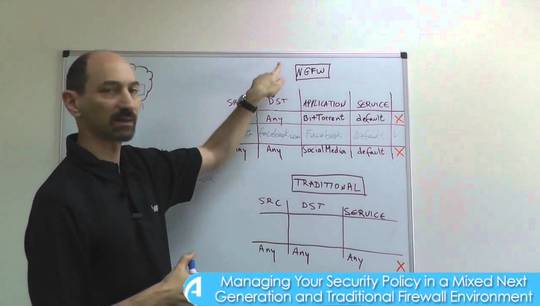
traditional firewalls are unable to do
so because they can filter based on the
ports and the protocols and they cannot
distinguish between legitimate traffic
to undesirable traffic to
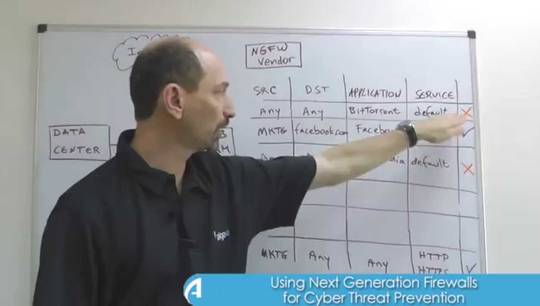
next-generation firewalls
the identity of the application and make
sure that we are and applications are
going through the same equipment except
that there's somewhere else
through a wireless connection inside the
campus Internet each time they connect
the same computer gets a different IP
address' so from a fire perspective that
filters the next filter decisions based
on IP addresses each of these instances
looks like a different machine that we
would like in the idea one to be able to
filter and make the same policy apply
all of these instances because it's the
same person and it's the same computer
it's just getting technically a
different IP address every time this is
another place where next-generation
firewalls can assist us because a
next-generation firewall can make
filtering decisions based on user
identity
at that instance because the same user
is using it so we can apply the same
policy and it will follow the user
regardless of whether they're connecting
or externally advantage of next
generation firewalls that make filtering
decisions based on application awareness
and the other is user identity based
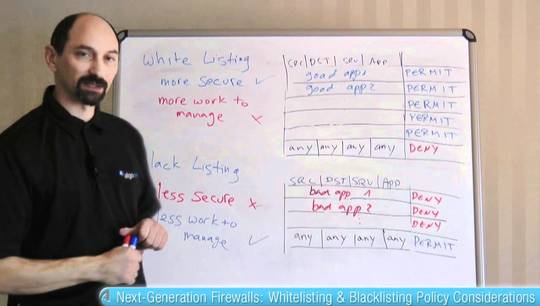
filtering much more power on the other
hand they could create management issues
that we need to deal with we need to
understand how to configure these things
and dealing with this type of issue is
going to be the topic of our next
section and SEC next segment thank you
very much