hello I'm an air-cushion L VP of
technology at alga SEC in the next few
minutes I'm going to demonstrate how a
user can be used to automate
connectivity management in a
next-generation data center based on
Cisco ACI so let's have a look at our
environment so we have our data center
managed by Cisco ACI the APIC is
managing the spine and lift switches we
potentially also have some firewalls
within the data center these can be
defined as layer 4 to layer 7 services
either cisco firewalls or any other
vendors controlling the east-west
traffic in many cases we will also have
parameter firewalls around the data
center again of the different vendors or
maybe further upstream in addition we
have cloud infrastructure so we have
cloud security groups protecting our
Amazon or Asia workloads and connecting
to all these pieces in the network we
have algo SiC algis that can connect to
all these different vendors and
platforms through their api's and then
provide end-to-end visibility across
your entire network this visibility can
then be leveraged either for
understanding what's going on
troubleshooting making changes in
operational activities etc but also for
risk analysis and compliance in addition
alga SEC also has a workflow automation
part which allows automatic provisioning
consistently across the different
vendors and platforms we will soon see
that part in action specifically in
regards to Cisco ACI on top of all that
we have our business context layer
business flow which serves as a
repository of the connectivity
requirements of each application this
repository can then be used either by
application developers or application
owners to get some visibility into their
specific applications connectivity and
also things like risks compliance
vulnerabilities etc in the context of
their own application but it is also
extremely important for the network and
firewall teams to see the business
context of everything they do whenever
they touch if
shut down the server perform maintenance
on the firewall etc they can easily see
what would be the business impact what
are the relevant business applications
that will be affected etc this concept
is very much aligned with a CIS
application centric approach so let's
see how algo SEC can be used for
automatic provisioning of connectivity
within the data center so this is my a
CI environment under this tenant is
broad one I have created the building
application this application has two
servers and some clients connecting to
the web server and let's say we want to
create some new connectivity in this
application from the web server into the
app server so let's create this change
in Alba set we'll create a new change
request and let's choose the right
networks for the exchange request
alternatively I could use predefined
names or the EPG names from ACI itself
and let's say we need to port 135 and
we'll create a change request note that
I created this change request from the
UI but alternatively I could have
uploaded a CSV file with the list of
flows or used in the api's al-ghasem
provides okay so I see that algo sec has
detected that the ACI is relevant for
this change and needs to be updated
specifically the a is prot one tenant in
this case it was an internal east-west
traffic change if it was something
external then probably some parameter
firewalls would have also been picked
let's continue with that and now before
actually committing the change algo
stick will perform a risk check to
verify that the quested change adheres
to the to the pre-approved security
policy including either after the box
best practices or customized company
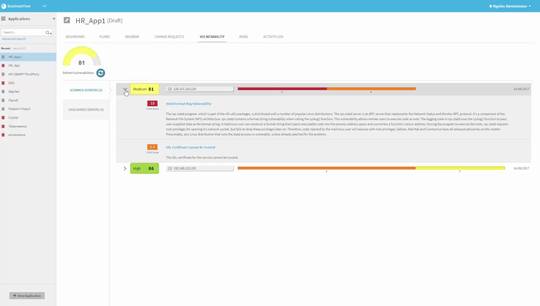
security policy in this case we can see
that the port we chose 135 is considered
risky its MSRP C it's considered a risk
even with between internal networks we
will choose to approve it anyway in this
case next step is to implement the
change algo sec now calculates how
exactly this change needs to be
implemented whether something needs to
be changed on the ACI itself and how and
we can see that a work order was
generated apparently we need to create a
new filter for the TCP 135 port and we
also need to add a new contract under
this tenant and this new contract will
use the existing web EPG as the consumer
and existing app EPG as the provider and
of course utilize our newly created
filter and as the next step I will hit
implement on device and now I'll go
slack we'll go ahead and push this
change to a peak
you've add northbound api's okay
implementation is incomplete let's have
a look and back to our a peak here we
can see the newly created contract it's
using a newly created filter on TCP 135
allowing access from the web server to
the application server note that I did
all this step-by-step just to show the
different parts of the workflow but in
reality this can be defined as zero
touch work flow where everything is
happening automatically within minutes
and it will only stop in case some
predefined condition was met things like
a high risk was detected so before
implementing the change you want someone
to manually approve it or something of
that nature also note that if other
firewalls were involved in the process
either within the data center or on the
parameter or potentially cloud security
groups those would have been picked by
Al Bocek as well and similarly changes
would have been pushed to their
management as well and with that we will
conclude our demonstration thank you